

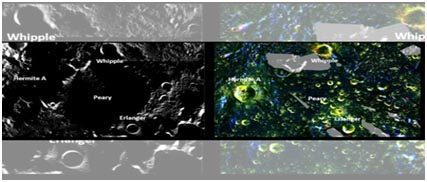
Bengaluru, November 8 – India laga Chandrayaan-2 mission, juntu launch kurishe 2019 te, etiya bhi nikiya khobor bonai ase, karon Indian Space Research Organisation (ISRO) ekta nikiya dataset release kurishe juntu Moon laga polar region bisari kora jibon dhang change kuribo pare. Orbiter te thaka Dual Frequency Synthetic Aperture Radar (DFSAR) use kori, scientist khan etu Moon laga north aru south pole map kuri lobo parise bishi detail te, resolution bhi around 25 metre per pixel tak ase.
Etu dataset, juntu 1,400 para bishi radar observation te bonai kora ase, lunar surface aru niche laga features bisari important jankari di ase. Circular Polarisation Ratio (CPR) juntu water-ice thaka indication dibo pare, aru surface roughness, dielectric property nishena measurement bhi include ase. Etu sob data para scientist khan buji pare kotha jagate rock ase aru kotha jagate frozen water thakibo pare permanently shadowed crater bhitor.
ISRO laga Space Applications Centre, Ahmedabad te, etu data process kori polar mosaic bonai dishe north aru south hemisphere laga, cover kori 80° para 90° latitude tak. Etu Level-3C data products toh public kuridiya ase PRADAN portal te, Indian Space Science Data Centre (ISSDC) para.
Expert khan koi ase, etu data release toh lunar science te ekta dangor step ase. Moon laga polar region khan toh important ase karon etu te ancient water-ice deposit thakibo pare, juntu future space mission karone resource aru solar system laga suru laga history bisari khan khan jani lobo pare. Etu achievement para, India ekta global contributor hisap te uthi ase planetary research te. Chandrayaan-2 orbiter, juntu etiya bhi lunar orbit te active ase, nikiya data di thake, aru Chandrayaan-3 laga 2023 te success landing ke bhi complement kori ase. ISRO laga etu dataset para scientific understanding deep kori dikhai dishe India laga leadership space exploration te